Road Icing: The Culprits
 Snow Snow
Snowflakes may be delicate and beautiful - but when they team up en masse, they turn roads and bridges into death traps. Most road ice accidents are caused by snow. It doesn't take much - even a dusting can be enough to make roads treacherous. In fact, the worst outbreaks of accidents happen during very minor snowfall events, rather than during big snowstorms when awareness and preparation levels are greater. Snow on roadways typically becomes more slick and dangerous as more traffic traverses it, due to the heat from tires melting, re-freezing and compacting the flakes into a thin sheet of ice.
 Freezing Rain and Freezing Drizzle Freezing Rain and Freezing Drizzle
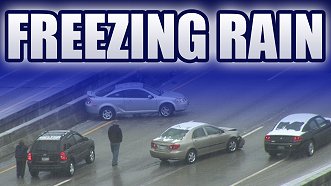
While snow is the most common cause of road icing, it is freezing rain and freezing drizzle that create the most treacherous and fearsome type of road ice, referred to as 'black ice'. Accident, injury and fatality rates are much higher during freezing rain than any other type of road ice condition (including snow and sleet) due to its invisibility and element of surprise. Freezing rain/drizzle happens when raindrops in a warm air layer aloft (in the middle levels of the atmosphere) falls through a layer of subfreezing air at the surface. When the raindrops hit the ground, they freeze on contact - creating a smooth, solid glaze of ice that covers everything on the ground.
This type of ice layer is the most slick of all precipitation types - creating nearly zero friction conditions with vehicle tires. Correcting a skid on black ice can be nearly impossible, as the vehicle tires will have close to zero traction. Loss of control on 'black ice' can occur even at slow speeds. 'Black ice' is so named because it appears dark, just like wet pavement. It is important to remember that 'black ice' will only appear 'black' on darker pavement surfaces such as asphalt. 'Black ice' on concrete pavement can appear gray or tan, for instance (the same color as the pavement surface).
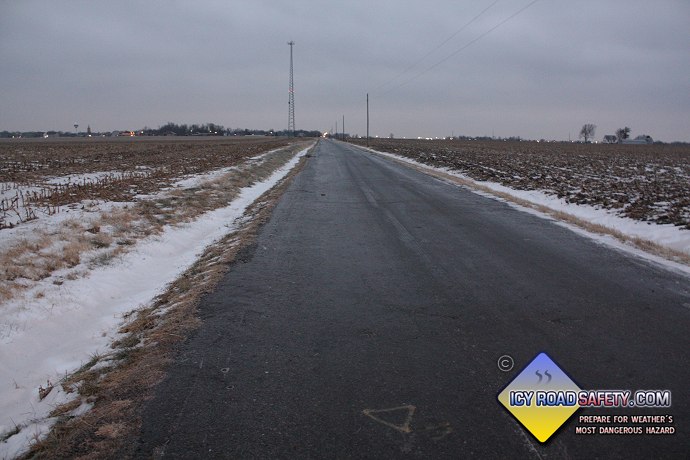
Invisible black ice completely covers a road
VIDEO: Deadliest Weather: Freezing Rain: This video has everything you need to know about freezing rain and its deadly characteristics. Learn the warning signs of freezing rain and what to do when you encounter it.
- Sleet
Sleet is similar meteorologically to freezing rain, in that both form due to rain falling from a warm layer aloft into a subfreezing layer at the surface. The difference with sleet is that the raindrops freeze into ice pellets in mid-air before they reach the ground. Sleet often occurs in conjunction with freezing rain, in which case 'black ice' will be the result. Sleet can be a warning sign that freezing rain is either imminent or occuring.
- Freezing Fog
Freezing fog is a less common cause of road icing, similar to freezing rain in its formation. Dense fog is nothing more than tiny water droplets suspended in the air. If temperatures are below freezing, these droplets can begin collecting on road surfaces (especially bridges and overpasses). Over time, a smooth layer of ice can build up on road surfaces, creating a 'black ice' situation.
- Blowing and Drifting Snow
Winds can cause snow on the ground to blow across and accumulate on roadways, long after the snowfall actually occured. More common in flat terrain where winds easily create snowdrifts, blowing snow can create sudden, unexpected patches of ice on roads during even clear, sunny days.
- Residual rainwater and/or groundwater
Previously-fallen rainwater can freeze onto roadways after temperatures drop below freezing. Runoff can drip or flow off of cliffs and hillsides, covering roads with a sheet of ice.
- Hail
Prolific hailstorms can cover roadways in a short period of time, creating slick conditions that can catch drivers off guard. Hail can accumulate and linger for long periods of time, even during summer temperatures. In rare cases, snowplows have been deployed during a few of the more severe spring and summer hailstorms.
- Man-made road icing
In rare cases, icy roads can be created from man-made sources. Automatic sprinkler systems and water main breaks have been known to cause accidents on nearby roads during subfreezing temperatures.
- Frost
Although rare, pure frost has been documented to cover roads and bridges even during clear, calm weather.
Educational Winter Driving Videos - Watch for Free:
Home | Risk | Stats | Accident Video | Icy Bridges | Tips | Warning Signs | If You Slide | If You Wreck
1,836
Average annual
deaths in the US
from icy roads
136,309
Average annual
injuries in the US
from icy roads
[ More Statistics ]
|
|
|