Road Icing: You are at Risk
FACT: Everyone is at risk
Road icing kills more than twice as many people every year than tornadoes, hurricanes, lightning and severe thunderstorms combined.
You may think tornadoes or hurricanes are weather's most deadly forces, and that coastal areas and 'Tornado Alley' are the only places where people should pay attention to conditions. But weather's worst hazard is one that most Americans will face every year. The lowly snowflake - and even more so, the supercooled water droplet (the source of freezing rain and freezing drizzle) - are the country's most prolific weather-related killers.
Precipitation during the winter deserves more respect than tornadoes, severe thunderstorms and hurricanes. Road icing is more likely to threaten your life than any other weather condition you'll ever face.
FACT: No location is immune
Anywhere that temperatures can drop below freezing is at risk for road icing during the winter. It's not uncommon for snow and ice to make an appearance once or twice a year in the Carolinas and Gulf Coast regions, for example. Even Florida can see subfreezing temperatures during the winter.
FACT: No vehicle is immune
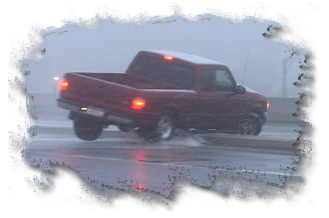 Four-wheel drive SUVs, tractor-trailers, sports cars; traction control, antilock brakes, stability control, good tires - it doesn't matter the vehicle or its safety features - no car will have enough traction on ice to avoid a loss of control. Watch our video clips and see for yourself how many SUVs and 4WD vehicles are involved in icy road accidents. Four-wheel drive SUVs, tractor-trailers, sports cars; traction control, antilock brakes, stability control, good tires - it doesn't matter the vehicle or its safety features - no car will have enough traction on ice to avoid a loss of control. Watch our video clips and see for yourself how many SUVs and 4WD vehicles are involved in icy road accidents.
FACT: It doesn't take much snow or freezing rain
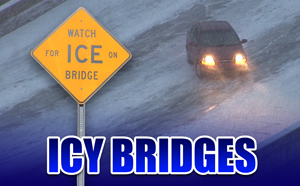
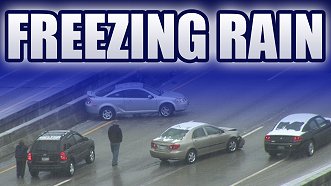
All it takes is a small dusting of snow or a light drizzle of freezing rain to turn a bridge or overpass into a vehicle trap. In fact, some of the worst accident outbreaks occur during minor snow or ice events rather than major snow or ice storms, when drivers and highway crews alike are caught off guard.
And likely most importantly:
FACT: NO ONE has the skill to drive at normal speeds on icy roads
A factor in many of the serious and fatal crashes is overconfidence in one's abilities and/or equipment (traction control, antilock brakes, stability control, good tires). Some feel that they have sufficient experience in winter driving, and can therefore continue normally (at or above the speed limit). But a fishtail on ice that occurs at highway speeds is usually unrecoverable by even the most quick-witted and experienced drivers. A person who enters a high-speed slide will quickly learn that it is something they can't handle - but all too late.
Educational Winter Driving Videos - Watch for Free:
Home | Risk | Stats | Accident Video | Icy Bridges | Tips | Warning Signs | If You Slide | If You Wreck
1,836
Average annual
deaths in the US
from icy roads
136,309
Average annual
injuries in the US
from icy roads
[ More Statistics ]
|
|